
By Nicole Packin, SAMP, UW-AAB, CFFP | Healthy Hounds Fitness Club
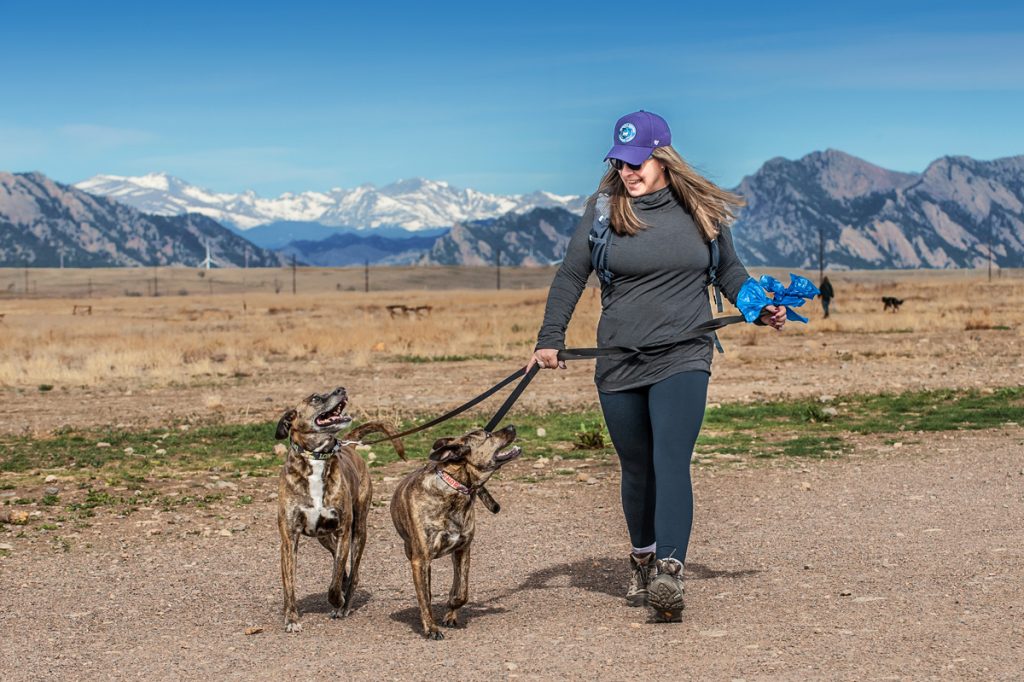
Weekend Warrior Syndrome is a pattern, not a diagnosis. It describes the dog who spends Monday through Friday resting, gets short backyard breaks or quick toilet walks, and then heads out for a three-hour trail hike on Saturday. The problem is not the hike. The problem is the fitness gap between what that dog’s body can actually handle and what Saturday demands of it. That gap is where injuries live.
This pattern affects more Front Range dogs than most owners realize, and the consequences range from muscle soreness that resolves on its own to serious orthopedic injuries requiring surgery and months of recovery. Nicole Packin, Certified Small Animal Massage Practitioner (NWSAM) and holder of a Master’s Certificate in Applied Animal Behavior from the University of Washington, works with Boulder County dogs and their owners directly. As a Fear Free Certified Professional (CFFP), she brings a veterinary-aligned approach to conditioning and recovery work at Healthy Hounds Fitness Club. She sees the physical aftermath of weekend warrior patterns in massage assessments every Monday. What she observes consistently: tight muscles in the trapezius, hamstring, and iliopsoas muscles, guarded movement, and gait asymmetries the owner often hasn’t noticed yet.


The solution is not canceling weekend adventures. It is building the weekday fitness base that makes those adventures safe. Consistent canine conditioning three to four days per week changes what a dog’s body can handle. Without it, even dogs who “love to hike” are hiking at physical risk every single weekend.
The injuries associated with the weekend warrior pattern are well-documented in veterinary literature. The framework for preventing them, through progressive weekday conditioning, is exactly what Healthy Hounds Fitness Club was built to deliver.
Weekend Warrior Syndrome in dogs describes the injury-risk pattern created by sedentary weekday activity followed by intense weekend exertion in a dog whose conditioning level does not support that demand. The fitness gap between weekday baseline and weekend exertion strains muscles, ligaments, and joints, raising injury risk from minor soreness through serious orthopedic damage.
It is not a formal veterinary diagnosis, but it is a practitioner-recognized pattern that Fear Free Happy Homes and veterinary rehabilitation professionals apply widely to explain preventable canine injuries.
The pattern shows up in predictable forms:

“Inconsistency is the hidden cause of many preventable injuries,” Nicole Packin says. “Weekend hikes without weekday conditioning strain joints, muscles, and soft tissue.”
A dog who is excited to go does not know whether their tendons are conditioned for the load. Drive and fitness are separate systems, and they do not communicate with each other.
When a dog is in high-arousal mode on a Front Range trail, adrenaline suppresses the pain signals that would otherwise slow them down. They will push hard because they want to, not because they can. A dog who looks strong and happy at mile four may be operating well past their physical capacity. The injury happens on the way home, or it appears the next morning when the dog struggles to get up from rest.
This is not a discipline problem or a willpower problem. It is physiology. Dogs are built to go hard when they are excited, regardless of their fitness state. That quality served them well as working animals. For a companion dog who is sedentary most of the week, it creates real injury risk on the one day they are finally running free.


The delayed presentation is one of the most important things owners should understand. A dog who limped home on Saturday afternoon but “seemed fine by Sunday evening” has not necessarily recovered. Delayed Onset Muscle Soreness (DOMS) peaks 24 to 48 hours after the triggering activity. Monday morning stiffness, reluctance to climb stairs, and quieter-than-usual behavior may all trace back to Saturday’s trail.
High-drive breeds carry additional risk. Labrador Retrievers, Australian Shepherds, and Border Collies are among the breeds most likely to push past their physical limits in high-arousal conditions. This is the same trait that makes them excellent working and sport dogs. On a weekend trail without weekday preparation, it is also the trait most likely to get them hurt.
Not every weekend warrior dog ends up in surgery. The injury spectrum runs from mild to severe, and understanding where it starts helps owners recognize early warning signs before the consequences become serious.
At the mild end, Delayed Onset Muscle Soreness (DOMS) is the most common result of weekend exertion that exceeds a dog’s conditioning level. The mechanism is identical to what humans experience after overdoing a workout: microscopic tears in muscle fibers cause inflammation and soreness that peaks 24 to 48 hours after activity. DOMS itself is not dangerous. It is a sign that the dog worked harder than their baseline supports. In the weekend warrior context, DOMS becomes a problem because the dog never recovers fully before the next weekend demand. The adaptive muscle repair that makes exercise beneficial requires consistent, progressive loading. A cycle of overexertion followed by five sedentary days prevents that repair.


Sprains and strains represent the next tier of severity. Sprains are ligament injuries; strains are muscle or tendon injuries. Both result from forces that exceed what the tissue can handle at its current conditioning level. A dog slipping on a rocky creek crossing at Eldorado Canyon, landing awkwardly after jumping a log, or making a sudden lateral turn to chase a scent while already fatigued can produce a soft-tissue injury that takes weeks to heal. Mild strains may resolve with rest in days to two weeks. Moderate injuries require controlled activity for several weeks. Serious tendon or ligament damage can take months.
The most serious injury associated with the weekend warrior pattern is cranial cruciate ligament (CCL) rupture, the canine equivalent of the human ACL. According to Colorado State University’s Veterinary Teaching Hospital, CCL rupture is one of the leading causes of hind-limb lameness in dogs. CSU, located 60 miles from Boulder, is one of the country’s leading canine orthopedic programs.
Most owners do not know this: CCL tears in dogs are rarely sudden accidents. CCL rupture is the endpoint of a degenerative process in which the ligament weakens over months or years before the visible failure. Intermittent high-load events on an underconditioned joint, exactly the weekend warrior pattern, accelerate that degeneration over time. Each individual weekend may look uneventful. The cumulative effect on the ligament is not. When the rupture finally happens, the standard repair is TPLO (tibial plateau leveling osteotomy) surgery. Recovery spans 4 to 6 months. The cost runs into the thousands of dollars per knee, and the problem rarely stops at one. While the original tear worsens, the dog compensates so heavily on the opposite leg that it sustains its own damage. By the time the first knee is repaired, the second is already compromised. Studies estimate that 50 to 60 percent of dogs who undergo one CCL surgery will eventually need the same procedure on the other knee.
Injury type | Mechanism | Recovery range |
|---|---|---|
DOMS (delayed onset muscle soreness) | Microscopic muscle-fiber tears from unaccustomed exertion | 24-72 hours |
Sprain (ligament) | Force exceeds tissue capacity at current conditioning level | Days to 4-6 weeks |
Strain (muscle/tendon) | Force exceeds tissue capacity at current conditioning level | Days to several months |
CCL (cranial cruciate ligament) rupture | Degenerative failure accelerated by intermittent load spikes | 4-6 months post-TPLO surgery |
Exertional myopathy | Muscle-fiber breakdown from exercise far exceeding conditioning | Days to permanent restriction (severe cases) |

Beyond ligament and soft-tissue injuries, the most acute risk from weekend overexertion is exertional myopathy. When muscles are pushed past their capacity, muscle fibers begin to break down at a cellular level. In severe cases, this becomes rhabdomyolysis: the breakdown protein myoglobin enters the bloodstream and can damage the kidneys. Symptoms escalate from stiffness to weakness to, in serious cases, dark-colored urine. Dark-colored urine after heavy exertion is a red-flag emergency. Call your vet immediately. Exertional myopathy is relatively rare in companion dogs, but the risk increases significantly on hot Colorado summer days with a deconditioned dog on a demanding trail.
Heat exhaustion belongs on this list as well. Deconditioned muscles generate more heat and dissipate it less efficiently than conditioned ones. A dog whose body is not adapted to sustained effort will overheat faster on the same trail under the same conditions as a conditioned dog. Colorado’s dry air accelerates that risk.
The weekend warrior problem exists everywhere, but Boulder County creates a specific version of it that other places do not.
Boulder sits at approximately 5,430 feet above sea level. Many of the Front Range trails that Boulder owners hike on weekends, including Walker Ranch, White Ranch, Eldorado Canyon, and routes leading into the Flatirons, climb to 9,000 feet and above. Popular Rocky Mountain routes reach 13,000 feet. Dogs not acclimatized to elevation face reduced oxygen delivery on top of whatever deconditioning they are already carrying. Altitude effects in dogs can begin around 8,000 feet. A dog already below peak cardiovascular capacity from inconsistent exercise faces a compounding disadvantage: the body working hardest on the steepest sections of a high-altitude trail is the body least prepared to do so.

The terrain compounds the risk. Boulder County trails involve loose rock, steep switchbacks, root-covered sections, creek crossings, and sustained elevation gain. Every uneven step requires active stabilization from muscles and joints. Proprioception, the neuromuscular system that maintains joint stability on uneven ground, degrades with deconditioning. A conditioned dog handles technical terrain with relatively efficient neuromuscular coordination. A dog with compromised proprioception from deconditioning is more likely to slip, land badly on a descent, or twist a joint absorbing an awkward step. Each misstep is an acute injury opportunity on top of the cumulative overexertion risk.

Colorado’s dry climate and altitude together accelerate dehydration. Dogs lose more water through respiration at elevation than at sea level. A deconditioned dog generating extra heat on a dry, high-altitude trail is losing water faster than their owner may realize. Dehydration compounds muscle function, decision-making, and recovery.
Then there are the seasonal extremes. Summer afternoon temperatures on Front Range trails can turn a morning hike into a heat-risk event by noon. Spring snowmelt leaves north-facing trail segments icy well into May. These conditions exist regardless of a dog’s fitness level, but they are more dangerous for a dog whose body is not prepared for sustained exertion.
Boulder owners have more reason than most to take weekday conditioning seriously. The trails here are genuinely demanding. The elevation is genuinely high. The terrain is genuinely technical. A dog who is fit for those conditions arrives there through consistent preparation, not enthusiasm alone.

The solution is not shorter weekend hikes. It is a fit dog.
Physiologically, a conditioned dog’s body is different from a deconditioned one in ways that matter directly for injury prevention. Muscle tissue maintains cross-sectional area and contractile efficiency. Ligaments receive consistent circulation and the adaptive stimulus that keeps them resilient. Proprioceptive neural pathways, the systems that maintain joint stability on uneven terrain, stay responsive. The cardiovascular system maintains the capacity for sustained aerobic demand. A dog who has been working at moderate intensity three to four days a week can handle Saturday’s trail because their body has been managing smaller loads all week. The Saturday hike is a peak event for a prepared system, not a sudden shock to an unprepared one.
Progressive overload is the mechanism. A widely used conditioning guideline recommends increasing exercise intensity by no more than 10% per week. That is practitioner consensus, not a controlled study, but it reflects sound conditioning practice: the body adapts to demands placed on it gradually, not in sudden jumps. Dramatic weekly spikes produce injury. Incremental increases produce adaptation.
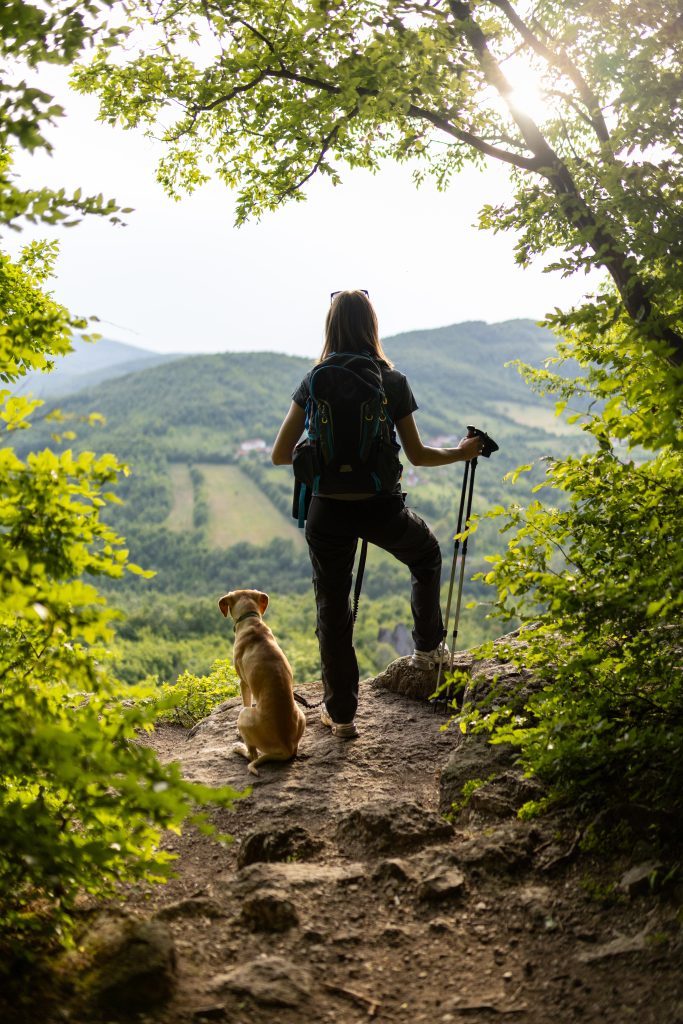

Frequency matters more than intensity at the conditioning baseline. According to AKC Canine Health guidance, three 10-minute conditioning sessions per week produce significant improvements in strength, balance, and mobility within a month. The bar for meaningful change is lower than most owners assume. Consistent moderate activity, structured walks, balance work, and targeted muscle engagement, builds the fitness base that makes adventure safe.
Warm-up and cool-down protocols are not optional components. Ten minutes of easy movement before and after intense activity prepares muscle and joint tissue for the demand, reduces acute injury risk, and helps the body transition out of high-intensity work. On a long Boulder County trail, that means starting slow and finishing slow, not beginning at trail pace from the parking lot.
The HHFC canine conditioning model is built on this framework. The Everyday Walk (minimum twice per week) builds the aerobic base. The Fitness Walk adds specific muscular conditioning. The Adventure Hike is the weekend peak event that a prepared dog can handle safely, not a gamble. For dogs who need recovery support or early injury detection, canine massage works alongside the conditioning program. You can see all of HHFC’s conditioning services and how they build on each other.
The pattern is recognizable once you look for it.
A weekend warrior dog’s week looks like this: quiet Monday through Friday with short bathroom walks or backyard time, then long, high-intensity activity on Saturday and Sunday. The dog is enthusiastic. They love the weekend outings. They show no hesitation on the trail. This is exactly the profile.
Call your vet if you see any of the following: limping that does not improve within 24 hours, dark-colored urine, difficulty bearing weight, visible swelling at a joint, or persistent panting at rest after returning home. These are clinical signs that require veterinary evaluation. Do not wait on them.
DOMS-level stiffness that resolves within 72 hours is likely muscle soreness. Stiffness or lameness that persists beyond 72 hours warrants a veterinary visit to rule out more serious injury.
Watch for these signs in the 24 to 72 hours after a demanding weekend:
That last point matters. “Seemed fine during the hike” is not a reliable health signal. Dogs mask discomfort during high-arousal activity. The signs appear hours later or the next morning when the adrenaline has cleared and the muscle inflammation has peaked.
If you recognize your dog in this list, the first step is understanding their current fitness level. Call 303-956-5755 or schedule a free new client consultation and Nicole’s team will assess where your dog is and what a safe conditioning plan looks like.
Nicole Packin, Certified Small Animal Massage Practitioner (NWSAM), Master’s Certificate in Applied Animal Behavior (University of Washington), and Fear Free Certified Professional (CFFP), performs all canine massage sessions for Healthy Hounds Fitness Club clients in their homes. She is the only team member certified to do so. Under Colorado law, every massage she performs requires a veterinary coordination form confirming the dog is a candidate for the service and noting any current ailments that would benefit from treatment.
What Nicole observes in massage assessments after big weekends is specific. Tight muscles in the trapezius, hamstring, and iliopsoas. Guarded movement when she works through the posterior chain. Gait asymmetries that the owner hasn’t noticed because the dog “seemed fine” on the trail. These are not post-exercise soreness in a fit dog. These are the physical signatures of a body that was asked to do more than it was prepared for.
The pattern repeats. Owners bring their Boulder County dogs in after a demanding weekend, Nicole finds the accumulated tension, the dog gets some relief, and then the cycle starts again the following week. The conditioning problem is not addressed by canine massage alone. Massage supports recovery. It does not build the fitness baseline that prevents the injury from happening in the first place.
The owners whose dogs show up Monday without those stress patterns are, consistently, the ones who have a weekday conditioning routine. Not the ones who only come in after a rough weekend.
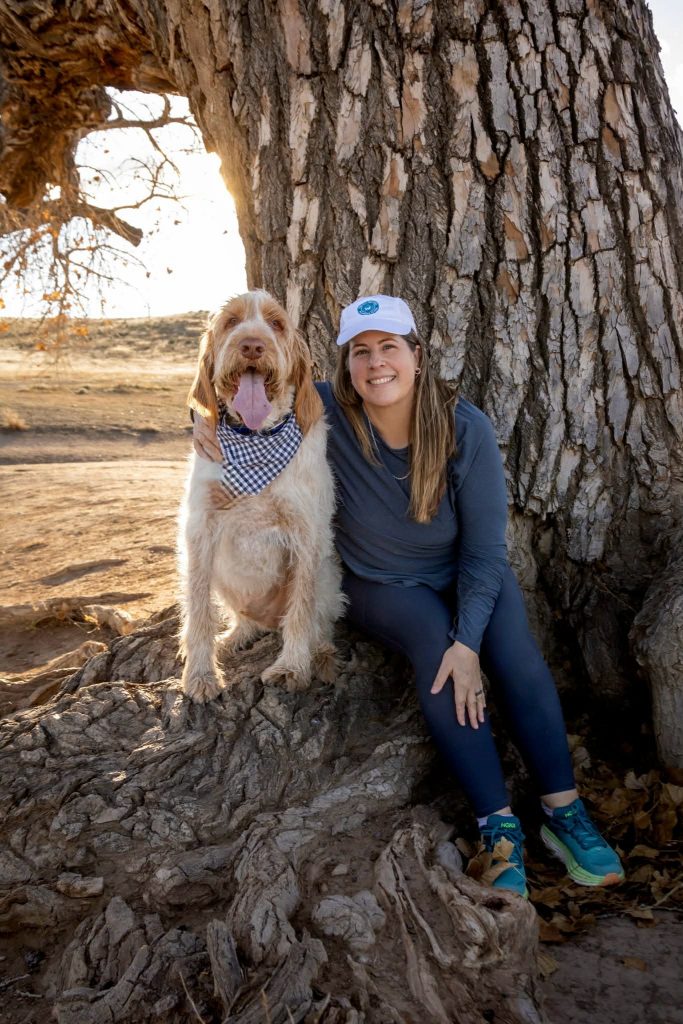
“We use progressive, structured programming to build strength, balance, endurance, and confidence gradually,” Nicole says, “so dogs aren’t just active, but prepared.”
For more on Nicole’s background, her approach to canine massage, and how she works with Boulder County dogs, visit her profile at Nicole Packin.
A: A dog who rests all week and then hikes hard on Saturday is in the weekend warrior pattern. Their body has not maintained the muscle strength, ligament resilience, or cardiovascular fitness that the weekend demands. That mismatch between rest-state conditioning and peak-event load is what produces injuries ranging from post-hike soreness to CCL tears requiring surgery.
A: A weekend warrior dog gets minimal structured exercise during the work week and then participates in high-intensity activity on weekends. The key distinction is between drive and fitness. An enthusiastic dog will run hard regardless of their conditioning level. A conditioned dog has the muscle strength, ligament resilience, cardiovascular capacity, and proprioceptive coordination to support that effort without injury. Enthusiasm is not fitness.
A: At minimum, two 20- to 30-minute sessions of moderate activity during the work week builds a meaningful conditioning base. That is a floor, not a ceiling. Three to four sessions per week at moderate intensity produces significantly better conditioning results, as AKC Canine Health guidance documents. The Fitness Walk at HHFC is designed specifically as the weekday conditioning component that makes weekend trail activity safe. The Everyday Walk covers the aerobic baseline at minimum frequency.
A: Monday and Tuesday are the tell. Look for slow rising, stair reluctance, limb favoring, joint heat, or energy that seems lower than normal post-hike tiredness. DOMS peaks 24 to 48 hours after the activity, so a dog who looked great on Saturday’s trail and can barely get off the couch Monday morning fits the timeline. If symptoms clear within 72 hours, muscle soreness is the likely explanation. Anything beyond that, or any visible swelling or limping, should go to a vet.
A: Yes, with an important nuance. Most CCL ruptures in dogs result from a degenerative process, not a single traumatic event. Repeated high-load events on an underconditioned joint accelerate cranial cruciate ligament degeneration over months. The weekend warrior pattern creates conditions for cumulative ligament stress even when each individual weekend looks uneventful. The Saturday hike that finally causes the rupture is rarely the only cause; it is usually the load spike that exceeds what a progressively weakened ligament can absorb. Surgery and months of recovery are the standard outcome. Conditioning is the standard prevention.
A: Yes, and for different reasons depending on the breed. Labrador Retrievers carry a genetic predisposition to CCL disease documented with more than 170 predicted risk loci. Border Collies and other high-drive working breeds are at risk because they will not self-limit; they work until they physically cannot, which means they push past the point of safe exertion every time they get the chance. Newfoundlands and other large breeds are prone because of the sheer mechanical load their size places on every joint, especially when they carry extra weight (lifetime CCL incidence in Newfoundlands runs as high as 22%). Beyond breed, overweight dogs (increased load on every joint with every step), dogs with steep tibial plateau angles (an anatomical factor affecting stifle loading), puppies in large and giant breeds (growth plates remain open until 10 to 24 months, making high-intensity activity during that window risky), and senior dogs with reduced recovery capacity all face elevated risk. If your dog falls into any of these categories, the case for structured weekday conditioning is stronger, not weaker.
Weekend adventures are not the problem. The absence of weekday conditioning is the problem.
A dog with a consistent weekday fitness base handles Saturday’s trail safely. Their muscles, ligaments, and cardiovascular system have been managing smaller loads all week. The hike is the performance they have been building toward, not a gamble.
The HHFC canine conditioning model is built specifically for Boulder County dogs whose owners want to keep hiking, not scale back. Structured weekday conditioning, progressive loading, and recovery support are what makes that possible without the Monday morning consequences.
If you are ready to build the fitness base your dog needs, schedule a free new client consultation. Call 303-956-5755 (Monday through Friday, 7am to 7pm) or request your free consultation to get started.
Want to see the full service model first? See all conditioning services and find the right fit for your dog’s current level and your schedule. To learn more about Nicole and her background before committing, visit the HHFC team.